
A new vibration is difficult to ignore. You may notice it through the helm or deck, or hear a change as engine speed rises. It might appear within a narrow rev range or increase during acceleration.
The temptation is to blame the propeller. However, the driveline extends from the engine and gearbox through the coupling, shaft, bearings and seals. A problem at any point can be felt elsewhere.
Several components may be involved, so the complete driveline should be assessed.
The sooner the source is confirmed, the easier it is to plan the repair before connected parts suffer unnecessary damage or the vessel becomes unusable.
Start With When The Vibration Occurs
The vibration provides useful clues. Useful details include:
The engine speed at which it begins
Whether it changes under load
Whether it occurs in forward, reverse or both
Any accompanying noise or shaft-seal leakage
Changes in vessel speed, engine loading or fuel use
History also matters. Vibration after a grounding, rope entanglement or propeller strike suggests different causes from a gradual problem. Recent engine, gearbox, shaft or propeller work should be mentioned.
A sea trial may be needed to reproduce the problem under load.
Alignment, Mounts And Couplings
The engine, gearbox coupling and propeller shaft must share the correct alignment. If that relationship changes, additional loads can be placed on the coupling, shaft bearings, seals, engine mounts and gearbox.
Alignment can be affected by worn or settling engine mounts, previous installation work, hull movement or incorrect adjustment. The resulting vibration may be accompanied by coupling wear, leaking shaft seals or repeated bearing problems.
Engine mounts hold the engine in position and isolate vibration from the hull. Rubber can deteriorate, fasteners loosen and mounts become unevenly loaded. A failed mount may alter alignment even when the shaft remains straight.
The coupling also requires inspection. Poor fit, damaged fasteners, corrosion or wear can introduce movement. Tightening visible fasteners will not resolve poor alignment or fit.
Alignment is measured with equipment rather than judged by appearance. Where appropriate, final measurements may need to be confirmed after the vessel is afloat and the hull has settled.
Shafts, Bearings And Seals
A propeller shaft can bend after impact, grounding or severe rope entanglement. Even a small bend may create noticeable vibration as shaft speed increases.
Measuring shaft runout establishes whether it is straight. The coupling, keyway, taper, threads, bearings and seal areas also require inspection. Corrosion or wear may determine whether repair or replacement is needed.
The cutlass bearing supports the rotating shaft. As it wears, excessive clearance may allow movement, noise and vibration. Bearing wear can occur through normal use, but poor alignment, a bent shaft, inadequate water flow or propeller damage can accelerate it.
Replacing a worn bearing without identifying why it failed may allow the same problem to return.
Shaft seals and stern glands can provide further evidence. A leaking seal may be caused by normal wear, but it can also indicate shaft movement, a damaged sealing surface or poor alignment. Replacing the seal alone will not provide a lasting repair if another driveline problem is contributing to the leak.
Propeller Damage And Performance
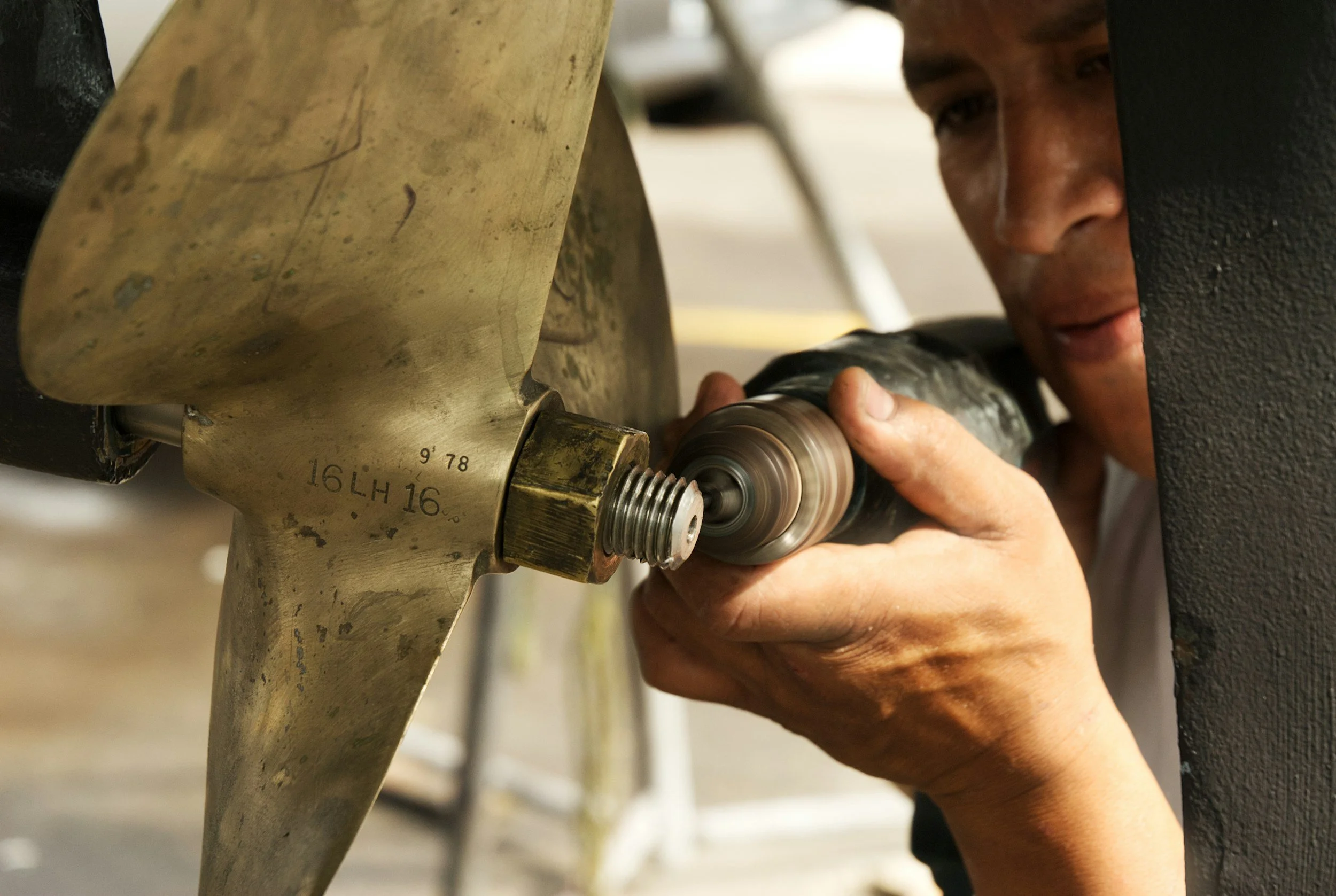
A bent, chipped or unbalanced propeller can transmit vibration through the shaft, mounts and hull. Damage is not always easy to see while the propeller is fitted, and specialist measurement or balancing may be required.
The propeller must also be correctly matched to the engine, gearbox and vessel. An unsuitable propeller can affect engine loading, fuel use, acceleration and the ability to reach the correct operating speed. Marine growth can create similar performance changes without permanent propeller damage.
Why Early Assessment Matters
Continuing to operate with significant vibration may increase wear throughout the driveline. A damaged propeller could affect the shaft and bearings, while misalignment may place unnecessary load on seals, mounts and the gearbox.
Westpark Marine can inspect the complete system, measure shaft runout and alignment, assess bearings and seals, and arrange specialist propeller work where required. Repairs may involve adjustment, machining or replacement of damaged components.
Final checks should confirm alignment, clearances, security and leaks. A sea trial can then assess the driveline under load and confirm that the vibration has been resolved.
Vibration is the symptom, not the diagnosis. Finding its source early gives you the best opportunity to contain the repair and protect the rest of the propulsion system.